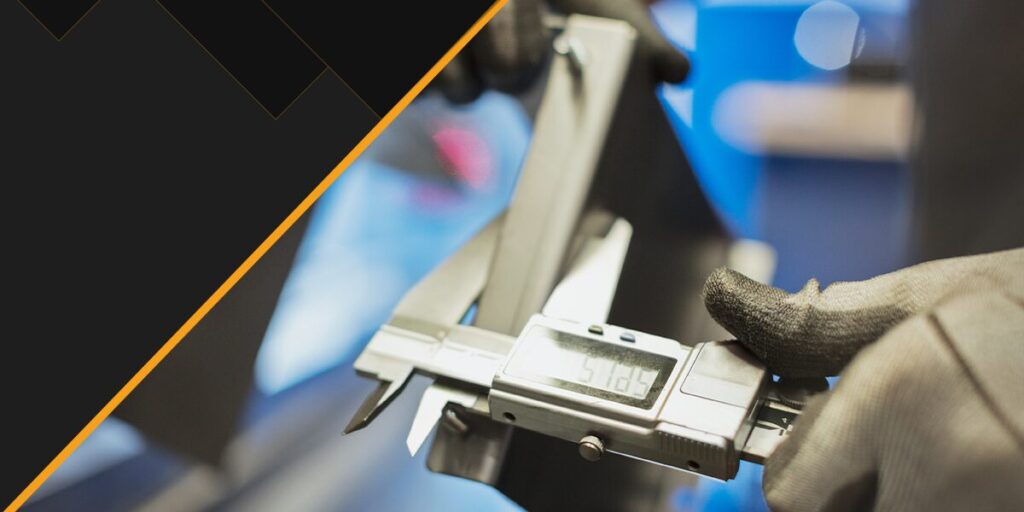
Dimensional calibration is the process of determining the accuracy of an instrument’s measurements by comparing its physical dimensions to a known standard. This process checks key characteristics of instruments such as calipers, gauges and micrometers, keeping them within specified tolerances.
Checking and adjusting measuring instruments against certified standards is crucial in maintaining quality control and production efficiency. Dimensional calibration ensures equipment works as intended, with product components fitting together correctly and adhering to industry-specific standards. Regular, professional calibration delivers core benefits, including:
Reliable and repeatable measurements prevent manufacturing errors that impact your bottom line. Discover how dimensional calibration works and how it helps maintain compliance with industry regulations.
Here’s a breakdown of the dimensional calibration procedures:
Dimensional calibration equipment measures an object’s physical size. Depending on the tool, these dimensions may include thickness, angles, diameter, length and width. This equipment can also measure geometrical properties for companies that machine parts. Some of these characteristics include the parts’ profiles, hole positions, roughness, parallelism and flatness.
Manufacturing environments utilize dimensional equipment to monitor their products’ adherence to their processes. Plus, verifying parts’ dimensions ensures components are interchangeable and properly assembled.
Your quality control department must ensure all dimensional equipment receives routine testing and calibration. Without these inspections and adjustments, your company may not be able to measure parts correctly. For some manufacturers, dimensional tools must meet federal and industrial specifications.
Our technicians use industry best practices to calibrate various dimensional measurement tools. The seven most common types of physical dimensional calibration are:
Work with an accredited lab that has calibrated a wide range of instruments across various industries. We are ISO 9001 Registered by NQA and ISO/IEC 17025 and ANSI/NCSL Z540-1-1994 Accredited by ANAB. Request a quote today to learn more about how dimensional calibration helps your facility keep producing quality, compliant parts.
