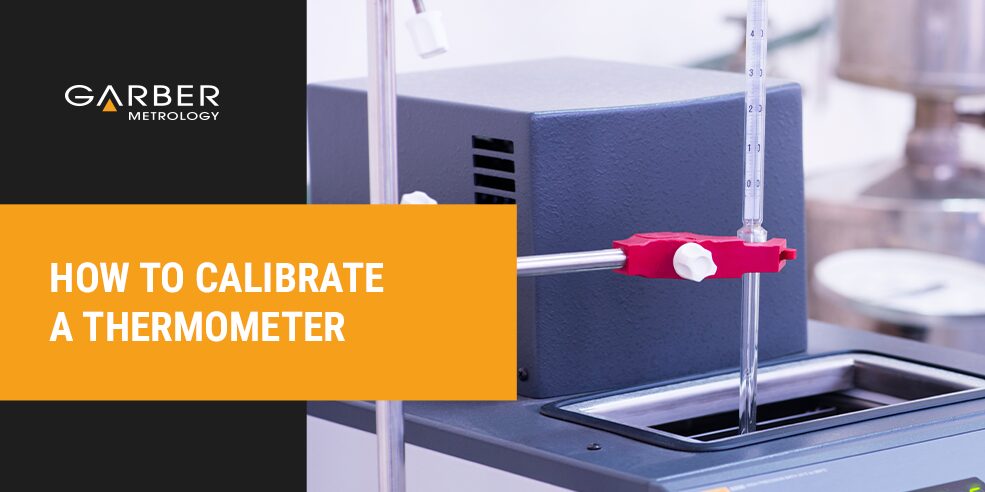
Thermometers can take many forms, all of which may be tested in different ways. Generally, the best way to calibrate a thermometer is to physically heat or cool the sensors to a known temperature, then compare the output to that temperature.
If the thermometer does not provide the known temperature, it should be adjusted. To properly calibrate a thermometer, the known heat source needs to be stable and uniform. It should not change over time or depend on the location of the thermometer’s sensors.
Garber Metrology provides accredited calibration services throughout the Mid-Atlantic Region. Our expert team ensures your equipment provides reliable measurements, protecting product quality and meeting regulatory standards.
Temperature-sensing instruments naturally experience measurement drift through regular use, environmental exposure and normal wear. Calibration ensures your equipment continues performing at its original specification level.
Proper calibration supports critical operations across industries. Food facilities maintain optimal storage and cooking temperatures that preserve product quality and freshness. Pharmaceutical manufacturers achieve the exact environmental control needed for product stability and effectiveness. Medical device producers maintain the documented accuracy required for FDA compliance and quality system certifications.
United States Department of Agriculture (USDA) guidelines mandate regular calibration for food handling operations. These requirements exist because temperature control is the difference between safe operations and potential health hazards.
Calibrated thermometers deliver measurable operational advantages. Facilities maintain consistent product quality through reliable temperature control. Equipment performs predictably, supporting efficient workflows and minimizing interruptions. Documented calibration records demonstrate your commitment to quality standards and regulatory compliance.
There are three common types of thermometers that can be calibrated and adjusted in different ways depending on how they measure and produce results.
Methods of calibrating a thermometer vary slightly between dial and digital models, but the fundamental process remains consistent. For dial thermometers with adjustment nuts, keep the probe in the reference bath while turning the calibration nut with a wrench. Rotate the dial face until it displays the correct temperature.
Professional calibration services use specialized equipment and controlled laboratory environments to achieve higher accuracy. Temperature-controlled facilities eliminate environmental variables that affect calibration accuracy. Traceable standards ensure documented compliance with industry requirements.
The frequency of calibration for your thermometer depends on several factors, including intensity of use, environmental conditions and specific industry requirements. The baseline recommendation for most industries is to have thermometers professionally calibrated every six to 12 months.
High-intensity, professional or commercial food service environments usually calibrate their thermometers daily or before each shift. Laboratories, industrial facilities and other general-use settings calibrate their thermometers monthly or quarterly.
If the thermometer displays inconsistent, slow or obviously inaccurate readings, it should be sent for professional recalibration. The instrument must be calibrated immediately if it has been dropped, bumped or exposed to extreme temperature changes.
Thermometers can give inaccurate readings for several common reasons, especially when calibration and proper use are not considered. Some key factors include:
Accurate/precise temperature measurement protects your operations from costly errors and compliance failures. Garber Metrology offers accredited temperature and humidity calibration services with a five-business-day turnaround and free local pickup and delivery. We are ISO 9001 Registered by NQA and ISO/IEC 17025 and ANSI/NCSL Z540-1-1994 Accredited by ANAB.
Contact us today for a free quote.
